Gallery & Graphite
Drawing from the masters, in the galleries of the Met
Homeschool art classes in New York City, grounded in classical art history and drawing. Students study great works in front of the real thing, pencil in hand: no screens, just real art, paper and conversation.
Grades K–12. Individual sessions or small groups, and parents are welcome to join in. First pilot term planned for early 2027.
Made for homeschooling families
Children today are curious and capable, and they deserve learning shaped around who they are. Homeschooling parents know this better than anyone: they give their time and take on the responsibility of being at the center of their children's education.
This program is built to support that work, not replace it. Parents are welcome to join in, whether their child comes on their own or with a group, and after each session, families receive a short note and a drawing prompt to continue the conversation at home.
Who it's for
Gallery & Graphite welcomes every homeschooling family, and it fits some approaches especially well.
- Classical education
- Art follows history in order, from the ancient world onward, and each grade band matches a stage of learning: observing, then analyzing, then expressing.
- Charlotte Mason
- Picture study happens in front of the real painting: children look closely at one work, share what they remember, then draw it.
- Unit studies
- Each era stands on its own as a theme, so families can join for the unit that fits their year.
- Every other approach
- Traditional, Montessori and online-learning families gain a screen-free, hands-on counterpart to their curriculum.
Much classical art is religious. We study it as art history, with respect for the beliefs of every family.
Looking first, then making
Children learn to see by drawing what is in front of them. Each session takes place in front of real masterpieces at the Metropolitan Museum of Art, and a drawing prompt carries the work home, so what students notice in marble and oil becomes something they can make themselves. There are no screens involved: just real works of art, paper and pencil, and conversation between people.
In the galleries
One on one or in a small group, we stand in front of one work at a time. We talk about the story, the technique and the proportions, then draw from it in graphite, the only medium the museum allows in its galleries.
At home
After each visit, a drawing prompt invites students to finish their sketch and try a technique the masters used. As the program grows, occasional outdoor sketching gatherings or larger workshops may be added.
Aligned with New York State's arts standards
Each session works through the four artistic processes of the New York State Learning Standards for the Arts.
- Responding
- Looking closely at a work and discussing what it means and how it was made.
- Creating
- Drawing from the work in the galleries, then developing it through the at-home prompt.
- Presenting
- Building a sketchbook portfolio and sharing finished work with family and peers.
- Connecting
- Relating art to history, myths and the student's own experience.
A four-year cycle through art history
The program follows the same history sequence used in many classical homeschool curricula, so art lessons line up with what your children are already reading. Families can join in any year.
First makers and the ancient world
From the first stone tools and cave paintings at the American Museum of Natural History to Egyptian treasures and Greek warriors' bronze helmets at the Met. Students see how people learned to shape stone, then gold, then marble.
The Middle Ages
Medieval treasures, arms and armor, and visits to The Met Cloisters. Students study illuminated pages, stone carving and stained glass.
The Renaissance
Italian and Northern Renaissance painting and the Gubbio Studiolo. Students work on perspective, the human figure and the oil painting process.
Baroque to Neoclassicism
Dutch Golden Age light, Rembrandt and Vermeer, and Canova's marble. Students study drama, light and the return to classical ideals.
Taught at every age
K–2
Looking games
Stories, shapes and animals in the art. Short gallery visits of about 45 minutes, with plenty of movement. A parent or caregiver comes along.
3–5
First drawings
The myths and history behind each work, plus the foundations of drawing: line, proportion, light and shadow. A parent or caregiver comes along.
6–8
Close observation
Contour and gesture drawing from sculpture and painting, and comparing works across galleries to understand how style changes over time.
9–12
The atelier
Sustained drawings from sculpture, written visual analysis and finished pieces for an art portfolio.
How drawing skills build
Alongside the history cycle, students follow the traditional sequence of an atelier, adapted to their age and practiced in front of real works.
- LineContour, gesture and the direction of forms.
- Shape and proportionMeasuring, comparing and placing forms accurately.
- Light and shadowValue: how graphite turns flat shapes into volume.
- FormDrawing sculpture and figures in three dimensions.
- CompositionArranging a whole drawing, as the masters did.
Drawing also strengthens other subjects: proportion and the Golden Ratio in math, describing and discussing works in speaking and listening, and the history cycle itself.
Every child chooses a project
Each unit offers three kinds of projects, so every child can follow what excites them.
Makers and engineers
How things were built to last: stone tools, weapons and armor, and the engineering behind temples and pyramids.
Adornment and color
Jewelry, pigments and precious materials, from Egyptian lapis and gold to the colors of Renaissance painting.
Heroes and stories
The warriors, queens, gods and myths behind the art, from Achilles to Hatshepsut.
A typical week
Meet at the museum
We meet at The Met Fifth Avenue and check in for our visit.
Look and talk
Twenty minutes with a single work: what it shows, how it was made and why it matters.
Draw
Students sketch in graphite from the work, guided at their own level.
Keep drawing at home
A drawing prompt lets students finish their sketch and try a new technique before the next visit.
Who leads the program
I was homeschooled myself. When I was six or seven, living in Egypt in the early 1990s, a visit to the Egyptian Museum in Cairo changed the direction of my life. Standing in front of Tutankhamun's golden mask, I felt connected to people from a world thousands of years away.
I went on to study fine art in France, first in Avignon, where my sculpture teacher introduced me to the Golden Ratio, and then in Rouen, where I earned my degree.
When I moved to New York, my path led me to international education, where I spent nearly ten years helping people have their studies recognized across borders. Through it all, my time in the galleries of the Met never stopped. This program brings both halves of my life together: classical art, history, and traditional drawing and painting techniques, and the joy of passing them on.
- Bachelor of Fine Arts (DNAP), École Régionale des Beaux-Arts de Rouen, now part of ESADHaR
- University Diploma in International Strategy for the French Language and Francophony, University of Rouen
- Nearly ten years in international education, evaluating academic credentials from more than 20 countries
- Executive Certificate in Design Thinking, MIT Sloan School of Management
- Founder of the Classic Art Society, a community of 1,300 members devoted to timeless masterpieces
- Founder of the Artistic Affinity Collective, a community of artists and art lovers
- Longtime guide to the Met for friends and fellow art lovers
- Interviewed by Les Amis du Louvre on art education, 2024
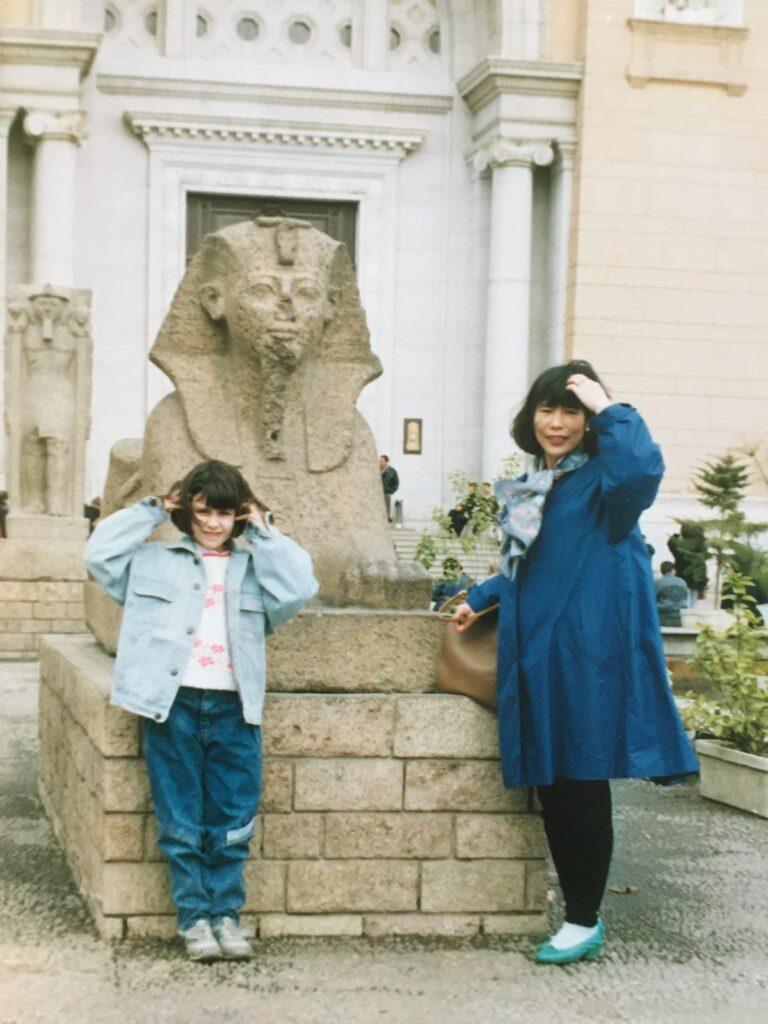
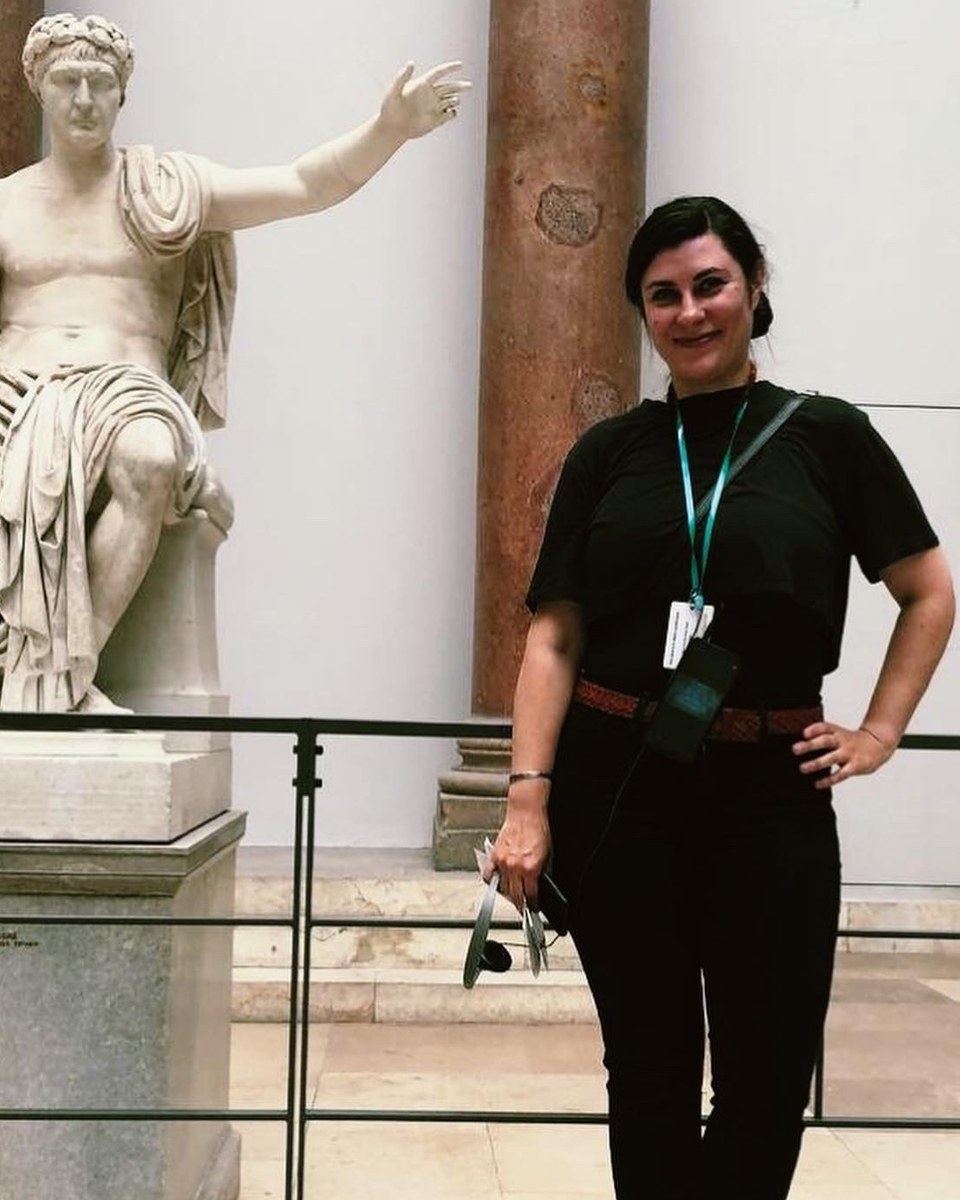
It began with a museum visit when I was a child.
The details
- Where
- The Met Fifth Avenue and The Met Cloisters, with Year I visits to the American Museum of Natural History.
- When
- Days and times will be set with our founding families. Tell us what works for you in the form below.
- Pilot term
- A first pilot term is planned for early 2027. Founding families get first access and a reduced pilot rate.
- Pricing
- Pilot pricing will be shared with the founding families list before enrollment opens.
- Format
- Children can join on their own for individual sessions. Once enough children of the same age enroll, small groups of up to 12 are formed. Parents are always welcome to join in.
- What to bring
- A sketchbook and graphite pencils. A starter supply list is sent after enrollment.
- Homeschool records
- New York families can list the program under visual arts or art in their IHIP. Each student receives a term summary with instruction hours and the arts standards covered, for quarterly reports.
Questions from parents
Do parents need to stay?
For grades K–5, one parent or caregiver per family joins the gallery sessions, in keeping with the museum's rules for young visitors. Older students can attend on their own, and parents of any age group are welcome to join in.
Does my child need to be part of a group?
No. Children can join on their own for individual sessions. When enough children of the same age sign up, small groups of up to 12 are formed, and families can choose either option.
Does my child need drawing experience?
No. Every group includes beginners, and instruction meets each student at their level.
How do you approach topics like weapons and war?
Through craft, engineering and the stories behind the art, adapted to each age. Younger children might design a shield emblem, while older students discuss how artists have portrayed war over the centuries.
Can we join in the middle of the four-year cycle?
Yes. Each year stands on its own, and students simply continue with the next era.
Is this a program of the Metropolitan Museum of Art?
No. Gallery & Graphite is an independent program. Visits follow the museum's group and visitor guidelines.
What happens if a session is missed?
Students receive the week's drawing prompt so they can continue at home, and they're welcome to bring that work to the next visit.
Join the founding families list
Founding families get first access to the pilot term, a reduced pilot rate, and a say in how the program takes shape. It takes two minutes, and there's no commitment.
Not ready to enroll yet? Get to know me first through my newsletter, Dreams in All Languages.
Gallery & Graphite is an independent educational program by Eleonora and is not affiliated with or endorsed by The Metropolitan Museum of Art.
