met

I was born in Russia and grew up in France, and now live in New York. I studied at the Beaux-Arts in Normandy, where I initially focused on contemporary art. Over time, my interests shifted toward the classical world, especially Greek and Roman antiquity and the tradition of the Old Masters.

I know the Metropolitan Museum of Art very well and enjoy sharing it with friends and acquaintances through informal tours that I offer freely. For me, the museum is a place where history, beauty, and deeper meaning can still be encountered in person.

Below is my Instagram, which is dedicated to this subject.

SHORPY_MET

As I’ve said in an interview for "Les Amis du Louvre" in 2024:

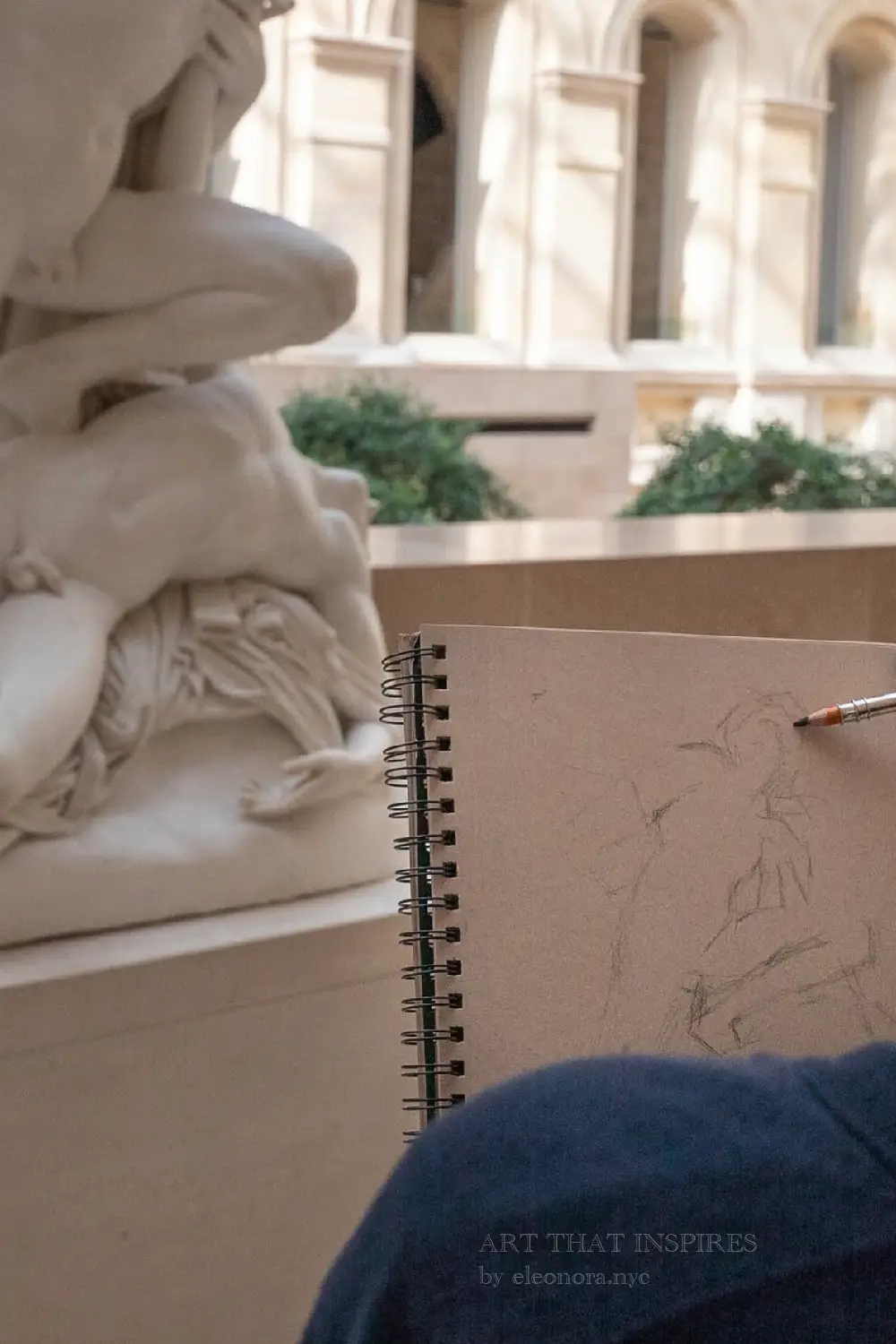
 "art is often not given the same priority as fields like science, technology, or business, even though it remains essential. There is, in my view, a broader lack of art education globally. Drawing is not about talent even though it is a unifier of arts, it is something that can be learned by anyone with attention and patience. Sketching in museums reflects that belief: it slows down looking and turns observation into an active, accessible form of learning."

My disctinctive interests:

  • Ancient Greek sculpture
  • Roman sculpture
  • The Renaissance
  • Technical mastery
  • Drawing from the masters
  • Art that uplifts and inspires
  • The relationship between art and civilization
  • Learning to see form
  • The Met as a living resource
  • Personal encounters with works of art

Art That Inspires-Sketching-Louvre
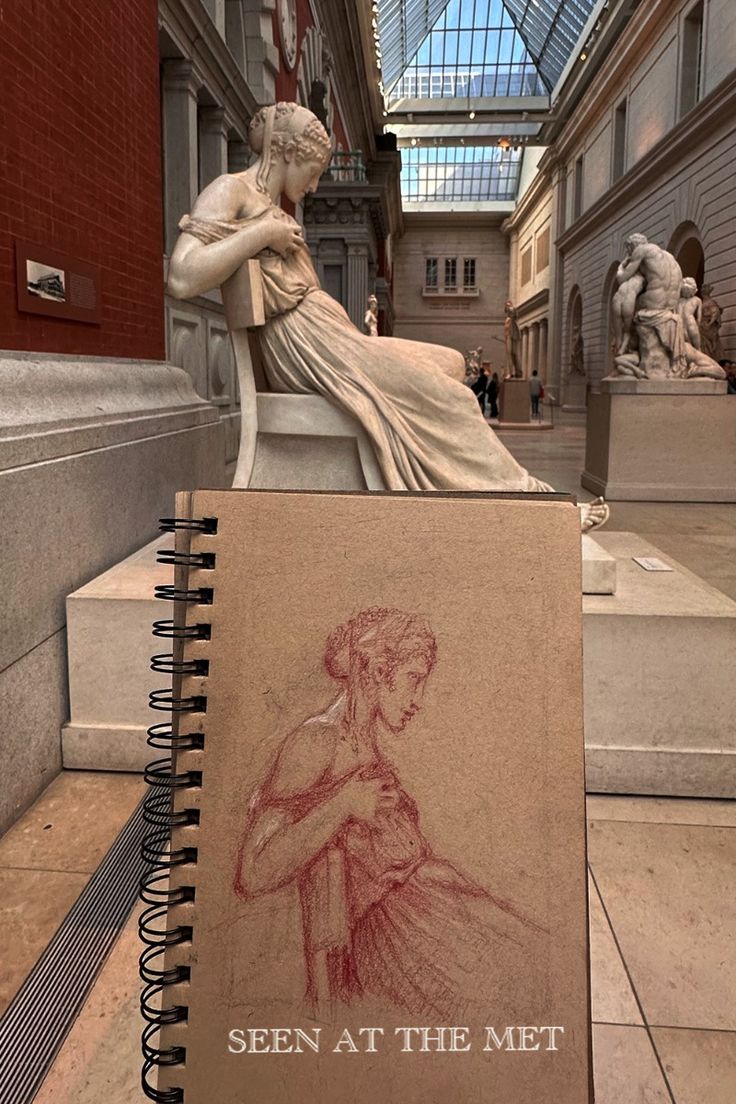
Sappho

This drawing captures the marble sculpture Sappho by Count Prosper d’Epinay as seen at the Metropolitan Museum of Art. The sketch emphasizes the sculpture’s classical elegance and softened detailing profile, echoing the neoclassical interpretation of the ancient Greek poet as a contemplative, timeless figure. By focusing on its presence in the museum space, the drawing reflects both the monumentality of the work and the stillness of observing it in person at the Met.
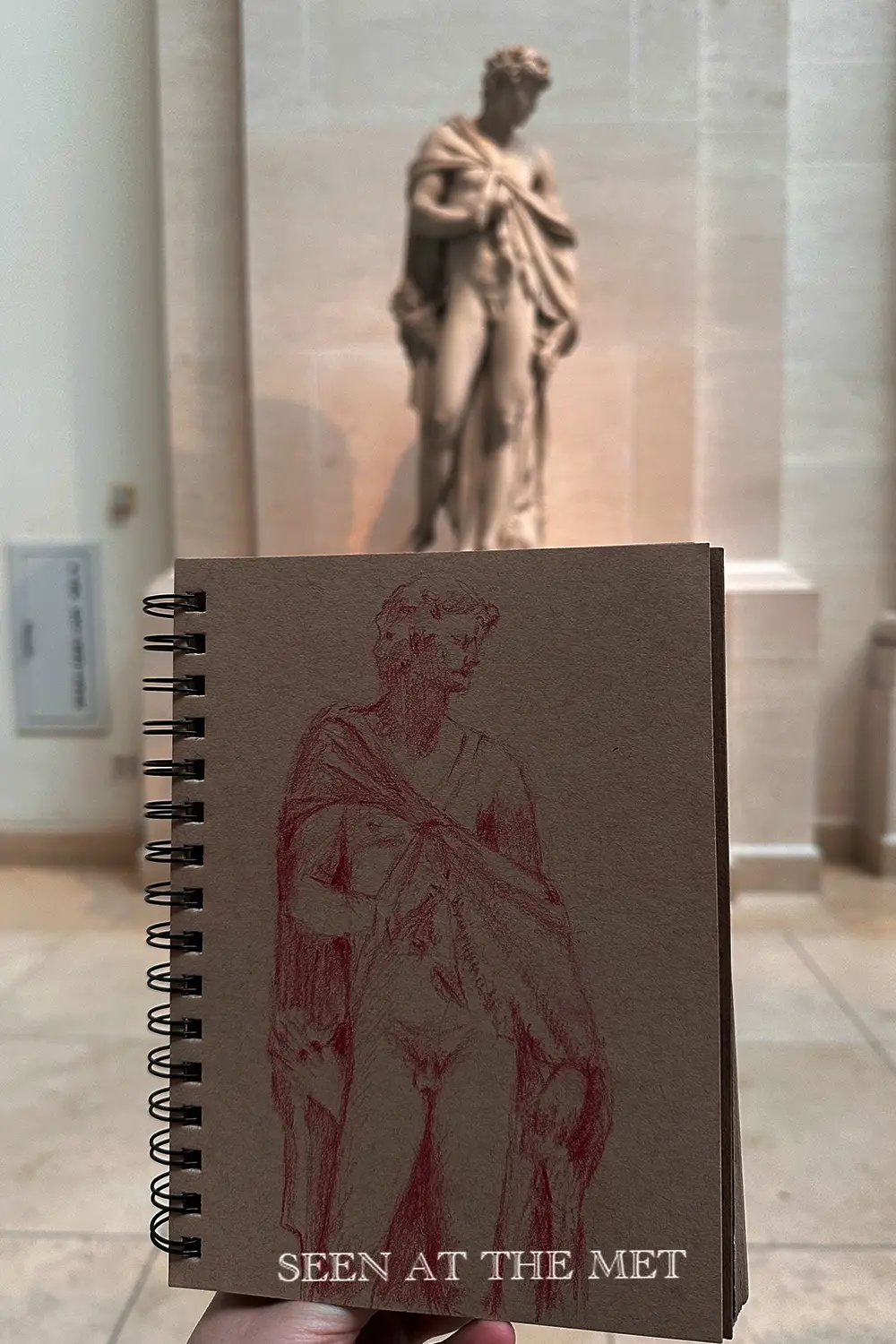
Seen at the MET – Meleager was the son of King Oeneus of Calydon and Althaea

This drawing features the marble sculpture Meleager by Antonio Gai as it appears in the background at The Met Fifth Avenue. The figure of the mythological hero is shown in a poised, youthful stance with an animal pelt draped over his shoulders, reflecting Neoclassical ideals of grace and idealized anatomy. In the sketch, the sculpture’s quiet presence reminds us of its classical themes of heroism.
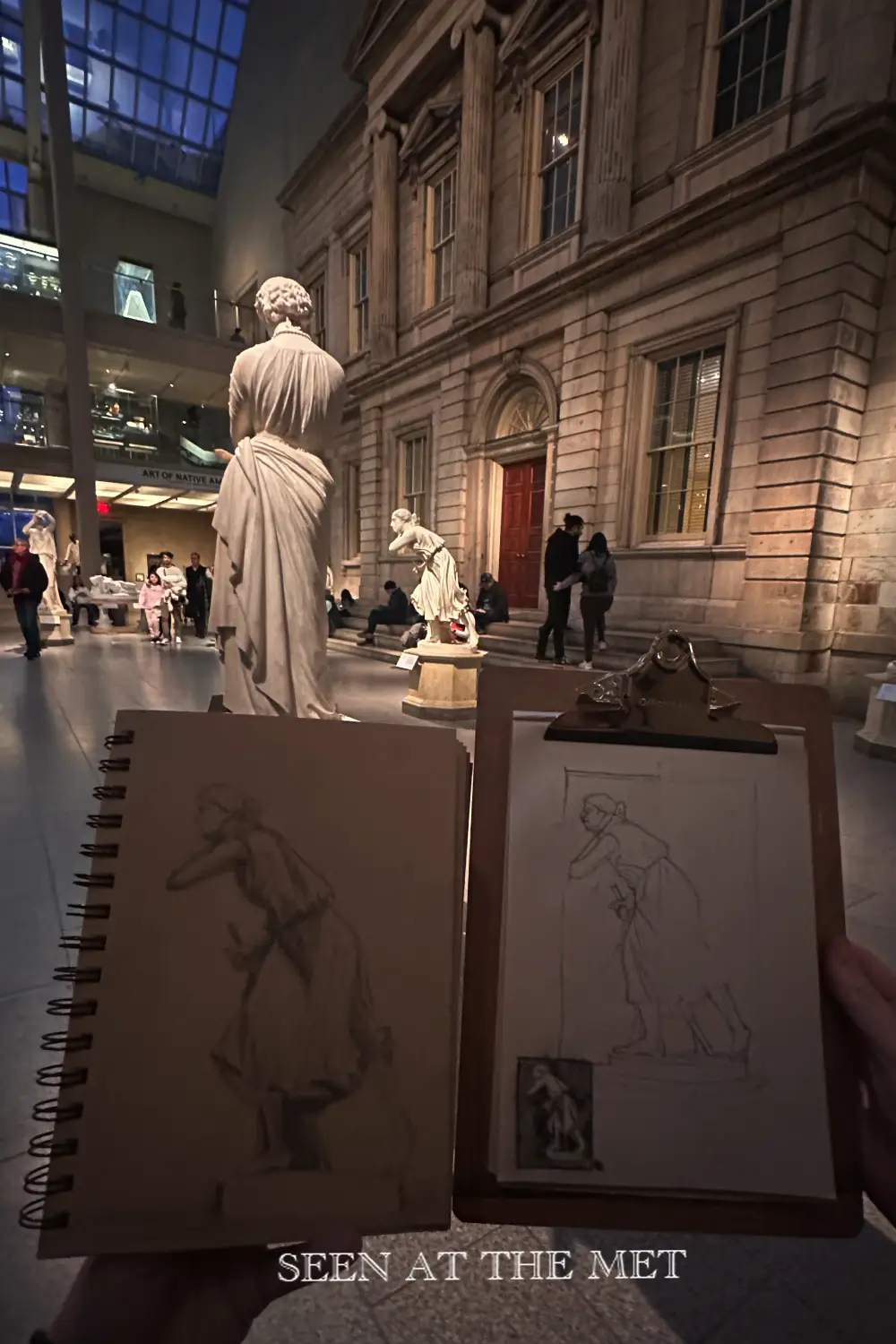
Seen at the MET – Pinterest – Pompei

This sketch shows Randolph Rogers’s Nydia, the Blind Flower Girl of Pompeii. The sculpture depicts the blind heroine from The Last Days of Pompeii, captured in a moment of urgency as she navigates the destruction of the erupting city. Her closed eyes, staff, and attentive posture emphasize her blindness and heightened sense of hearing, while classical ruins at her feet suggest the collapse of Pompeii. In the drawing, I studied the figure and how to compose it on my page.

Lesser-Known Ways to Experience the Met

The museum is too vast to take in all at once. Having visited it more than a hundred times, if not more, I have learned that the best way to experience it is gradually. Over time I have come across a few lesser-known ways to engage with the museum that many visitors overlook.
Guided Tours of Hidden Highlights
Join me for a tour of the Metropolitan Museum of Art through the eyes of a sketcher, researcher, and artist who studies timeless works not just historically, but as living sources of artistic inspiration.
 
Together, we’ll explore overlooked connections between works from the Greek and Roman galleries, Chinese Buddhist sculpture, European painting, and American art. Rather than focusing on academic theory alone, this tour approaches the museum through close observation, visual relationships, and the enduring artistic ideas that travel across cultures and centuries.
 
As someone who regularly sketches, researches, and continues developing my own work through these encounters, I’m especially interested in how artists reference, reinterpret, and build upon earlier traditions. Many of the observations shared during the tour come from years of looking closely at works that visitors often pass by, despite their lasting influence on the history of art.
 
This is a tour for people who want to slow down, notice more, and experience the museum as an interconnected conversation between artists across time. Interested in joining? Send me an email.
Free Tours
One of these is the museum’s free tours. They offer a thoughtful introduction to different parts of the collection and are a great way to encounter works you might otherwise pass by. Led by volunteer guides trained by the MET, the tours provide context and connections that can change the way you look at a gallery or a single work of art.
 
A few practical tips make the experience even more rewarding: check the tour schedule a day or so in advance, arrive on time, and treat it as part of your overall visit rather than something to rush through. Preparation pays off, because the museum can easily feel overwhelming, and it’s easy to get stressed trying to “do it all” in one visit. A calm, structured approach will help you truly enjoy the art and absorb the details that make an art work special.
The Observant Eye
The Observant Eye is an art education program open to visitors. It is not widely known and mostly attended by New Yorkers “in the know.”

I have attended several sessions over the years and learned a great deal from trained educators, many of whom are experts in their fields. This one-hour program encourages slow looking and discussion, revealing details and context that are easy to miss on your own.

Check the session schedule in advance and plan your visit so you can attend without rushing. You can also reach out to me for a calendar link to coordinate a visit. Sessions are infrequent, so this works best for someone based in New York City.