
A rare, almost miraculous reunion of works that shaped centuries of artistic tradition and continue to inspire today. On view at the Met, New York, March 29–June 28, 2026.
The exhibition dedicated to Raphael’s work had an exclusive members’ opening before its official public debut on March 31, 2026.
As you enter the galleries, you first encounter a portrait of a young boy, thought to be a self-portrait of a precocious genius in the making.
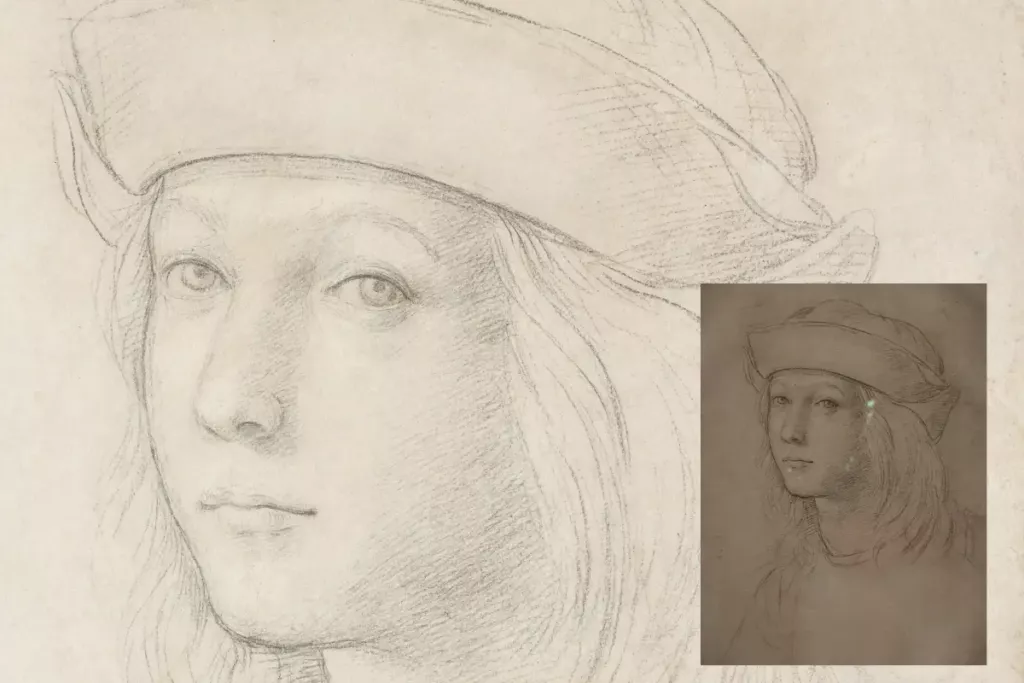
This is Raphael: Sublime Poetry, a once-in-a-lifetime exhibition with over 170 masterpieces, many never before seen together. Never in my life have I experienced something like it. It felt like a nuclear bomb of mastery, as if all the molecules of one body were finally reunited and their magical energy fully activated.
I have seen Raphael’s iconic works in Paris at the Louvre, at the Met, at the Gemäldegalerie in Berlin, the Pinakothek in Munich, and the Albertina in Vienna. I have seen many in person, but this time it left me changed.
The experience felt complete. My phone didn’t even survive until the end of the exhibition, dying despite being fully charged. Between taking photos for future research and listening to the audio guide, the experience demanded full attention. Every piece mattered. Even the ones that looked innocuous had a purpose in telling the story. That story begins with his early years and ends with a takeaway that left me truly humbled.
I see the exhibition in three parts in my mind:
Early Genius and Innovation
Recognized early by his father, a poet and artist, Raphael’s talent was precocious. He trained in the workshop of Perugino and brought a radical innovation: placing divine figures on the same scale as worshippers. This made them closer, more accessible, while still reminding viewers of their once human presence on Earth.
He followed the “Devout Style,” or maniera devota, as you can see in Perugino’s Madonna and Child with the Infant St. John, where asymmetrical placement creates intimacy, inviting private engagement.
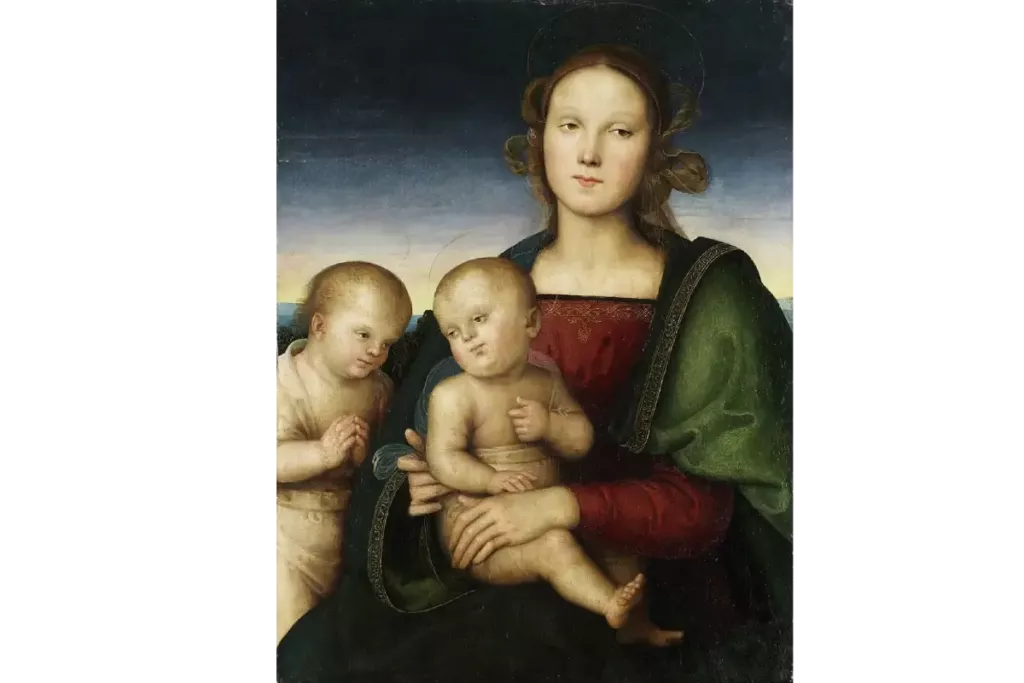
I can imagine he faced rejection at first, but he paved his way regardless. Eventually, his sketches impressed the papal world. He delivered on time, collaborated well, and multiplied his output through highly organized workshop.
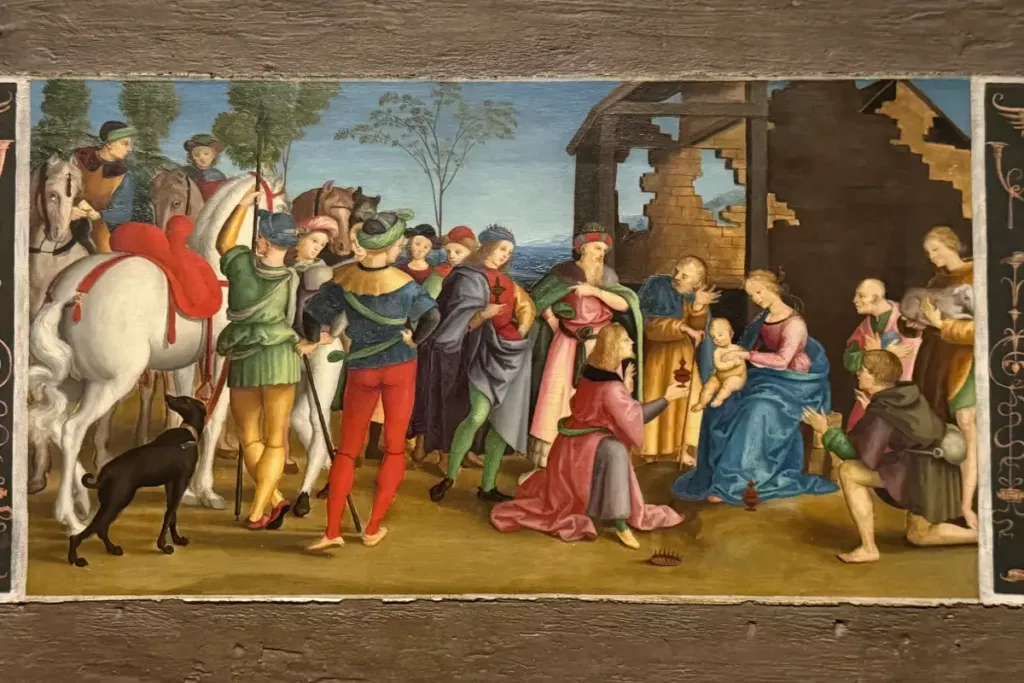
Raphael was approximately 20–21 years old when he painted the Annunciation panel below. Three of these panels were on display at the exhibit; they are usually housed in the Musei Vaticani, Pinacoteca Vaticana, Vatican City.
Legacy Through Others
Beyond his own masterpieces and collaborations, Raphael’s legacy lives on through the artists he trained. What stands out today is how rare this kind of experience has become.
In the Renaissance, a young pupil didn’t just learn technique. Instead, they entered a complete world of making. They started by grinding pigments, preparing panels, and copying the master’s drawings. Over time, they absorbed proportion, composition, and ultimately a way of seeing.
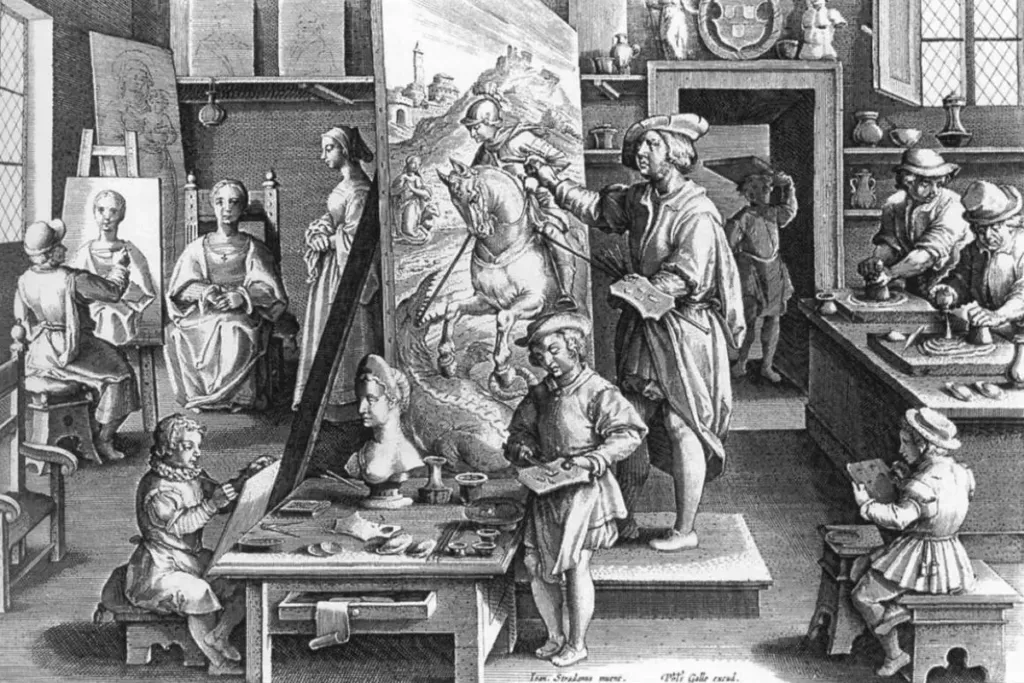
Learning Through Making
At the same time, this training went far beyond specialization. Pupils didn’t focus on a single niche. Rather, they participated in an entire system that balanced craft, vision, and ambition.
For example, a student might begin with background elements like skies or decorative motifs. Gradually, they earned the chance to contribute more meaningful parts of a composition. In rare cases, they even stood out—just as Leonardo once did in Verrocchio’s workshop.
As a result, those who stayed long enough gained not only skill, but also a complete understanding of how an artistic enterprise functioned. This was the case for Raphael.
A Scaled Vision
Raphael took this system further than most. While many masters trained only a handful of pupils, he trained dozens. In fact, he multiplied his vision across an entire network of artists.
His workshop functioned almost like a creative engine. He designed the compositions, while assistants executed large portions under his direction. This allowed him to meet demand without sacrificing coherence.
More importantly, this structure carried his ideas forward. Artists like Giulio Romano and Perino del Vaga didn’t just assist; they actually extended his legacy.
Why This Feels Lost Today
Looking back from 2026, this kind of immersive mentorship feels almost impossible to replicate. Today, artistic training is often fragmented and highly specialized.
As a result, many young artists feel disconnected from a larger tradition. They learn techniques, but rarely inherit a complete vision.
This is what makes the exhibition so powerful. It does not just show Raphael’s work; it reveals the scale of what he built and passed on. From smaller works to large commissions, all created for the most important patron of the time, the Pope.
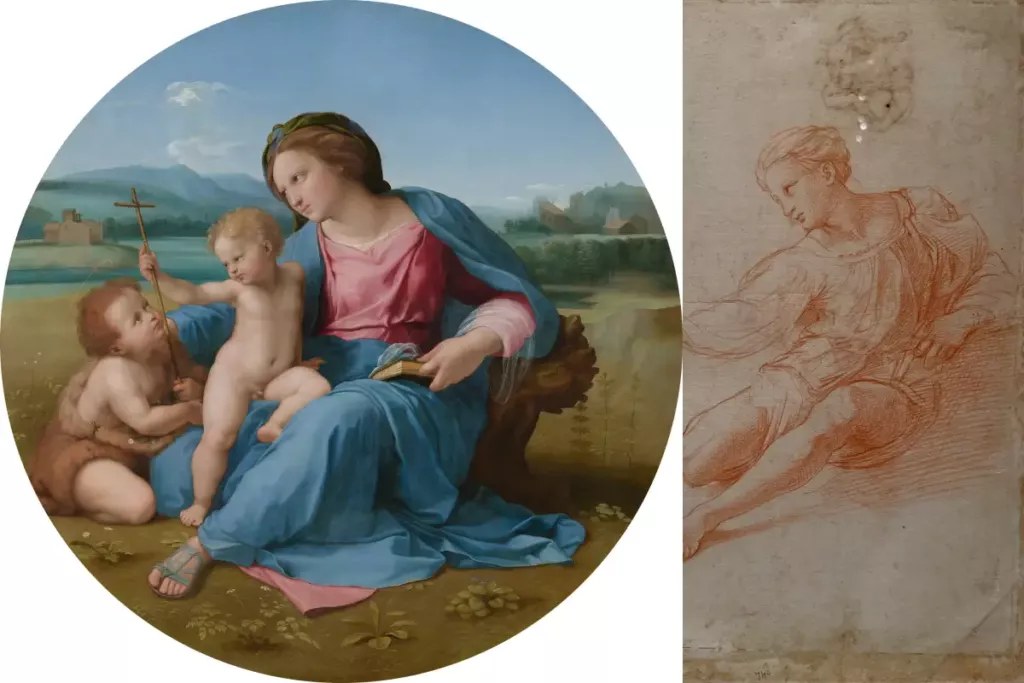
His work invites humility. It invites us to learn. It invites us to create something worthy with the time, the hands, and the heart we have been given.
For more reflections on classical art, explore Artistic Affinity Collective and my essays at Dreams in All Languages.
This is one of the few books that helped me understand what I experienced in that room.
