A short layover in Copenhagen, and what I found instead of the dagger I was hoping to see
Some of you may know that whenever I travel, even for a few hours, I try to visit a museum. On my way back to Berlin I had a short layover in Copenhagen, and my plan was simple: go to the Ny Carlsberg Glyptotek and spend my time with the ancient marbles. Unfortunately, it was closed that day.
So I kept walking. On City Hall Square I passed the Lur Blowers, two bronze men on a tall column blowing the long horns of the Bronze Age. In my opinion, it was a sign of where my day was going. I continued to the National Museum of Denmark, where I only had time for the free galleries, a quick bite, and then the train back to the airport.


I didn’t get the chance to see the Hindsgavl dagger, the most famous flint dagger in the world. Still, what I did see made me think about it, and about how we look at these objects today.
Stay with me until the end, because the story finishes at home, with a dagger I could actually hold in my hand.
A Wall of Flint Points
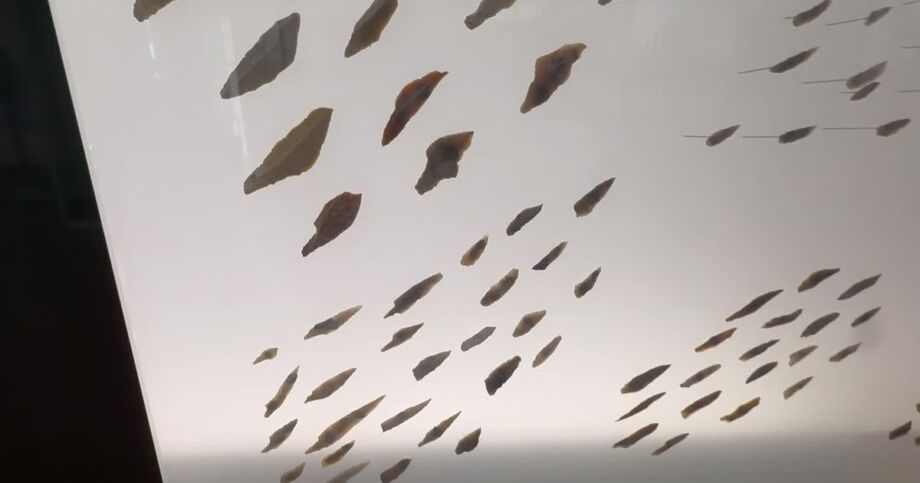
One of the first things I saw was a white wall covered with hundreds of flint projectile points, all arranged in the same direction. It looked to me like a flock of birds, or like rain falling from the sky. I filmed it because I couldn’t stop looking.
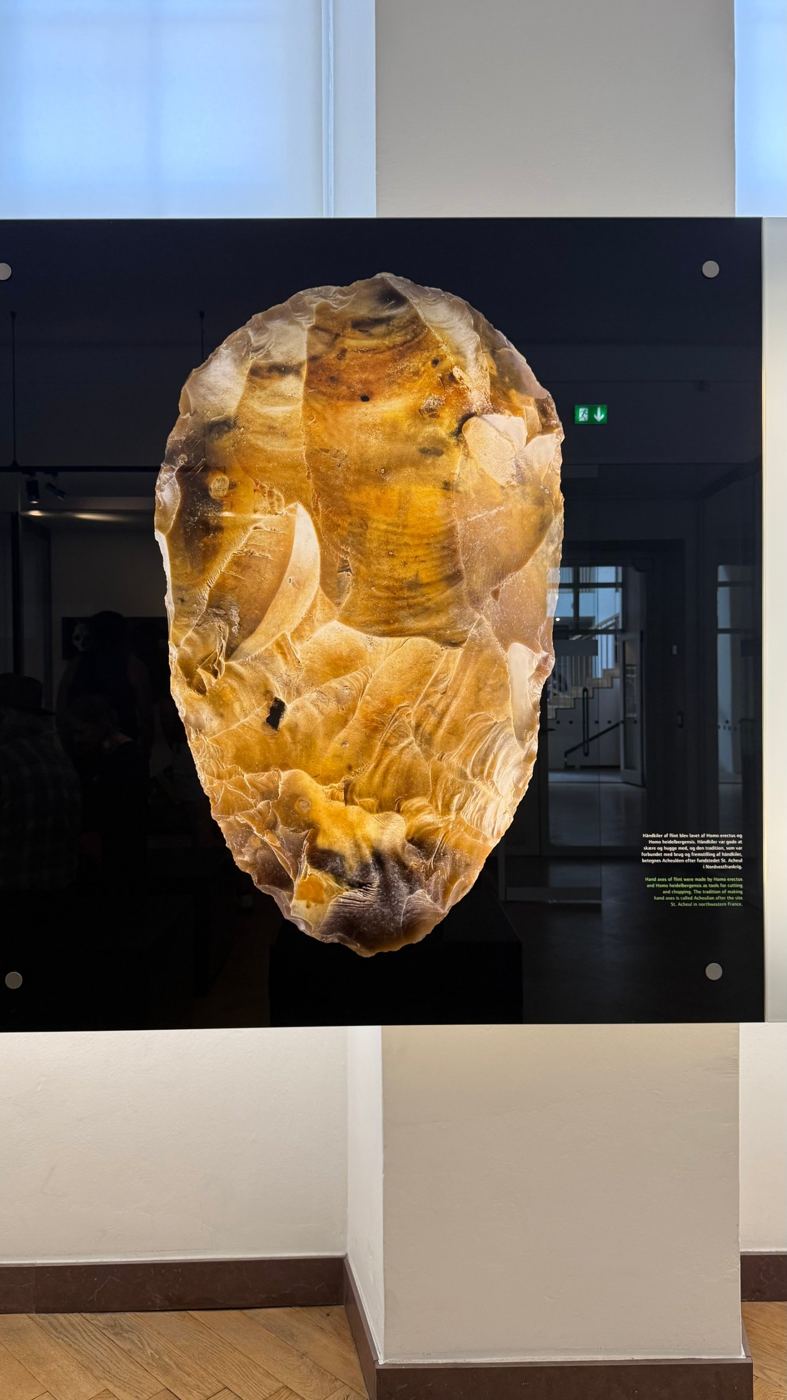
Not far from there, a large flint hand axe is displayed on a lit panel, glowing in shades of honey and amber, almost like a stained-glass window. The label describes it simply as a tool “for cutting and chopping.”
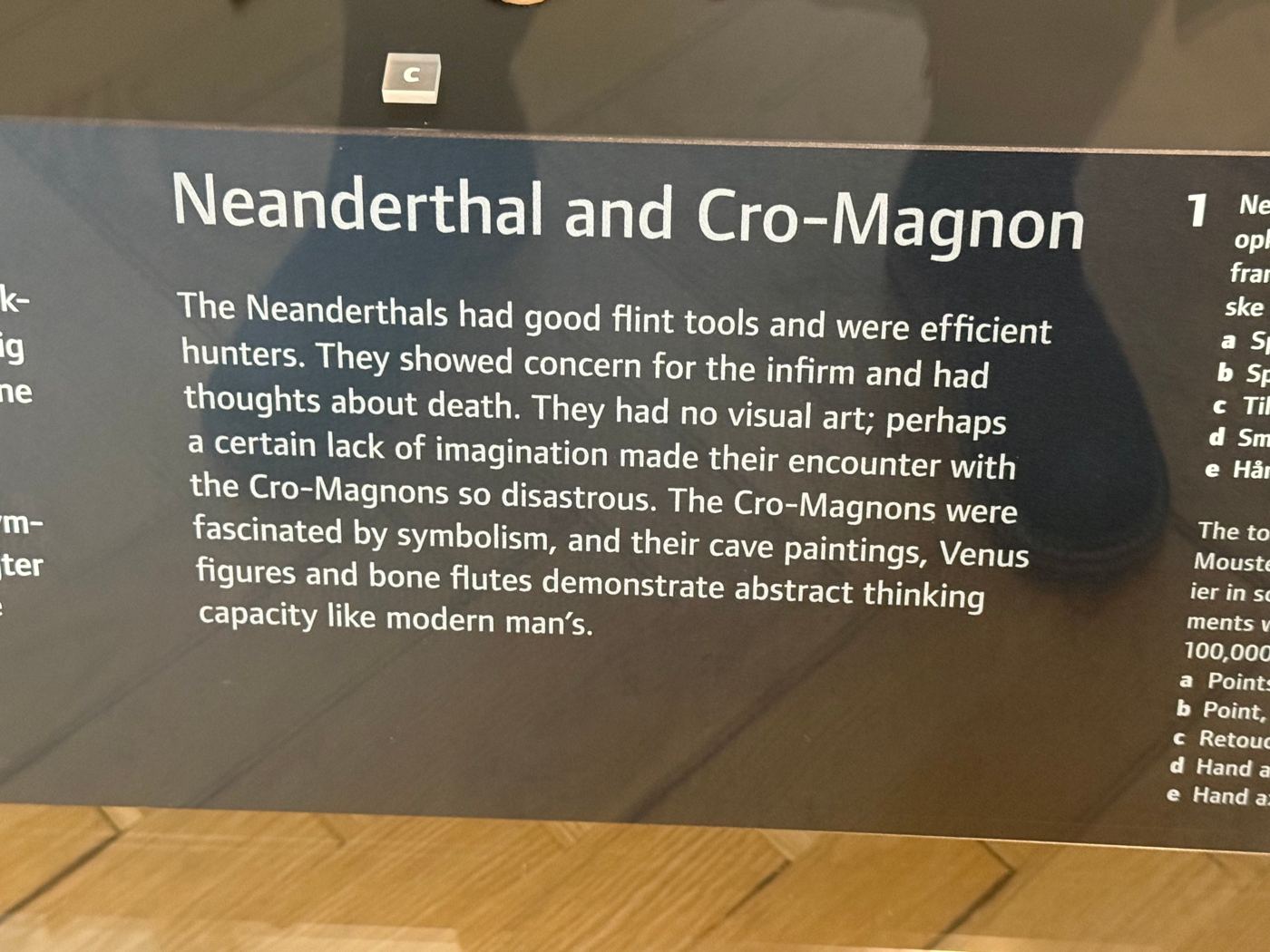
Another label caught my attention. It says that the Neanderthals made good flint tools but had no visual art, and that “perhaps a certain lack of imagination” made their encounter with the Cro-Magnons so disastrous. Reading that, I wondered whether we are not sometimes the ones lacking imagination when we look at the people of the past.
Just «For Show»? The Danish Flint Dagger
In one case there is a late Danish flint dagger, grey and worked with those fine, parallel ripples that make these daggers so famous, next to a polished axe and the raw flint they were made from.
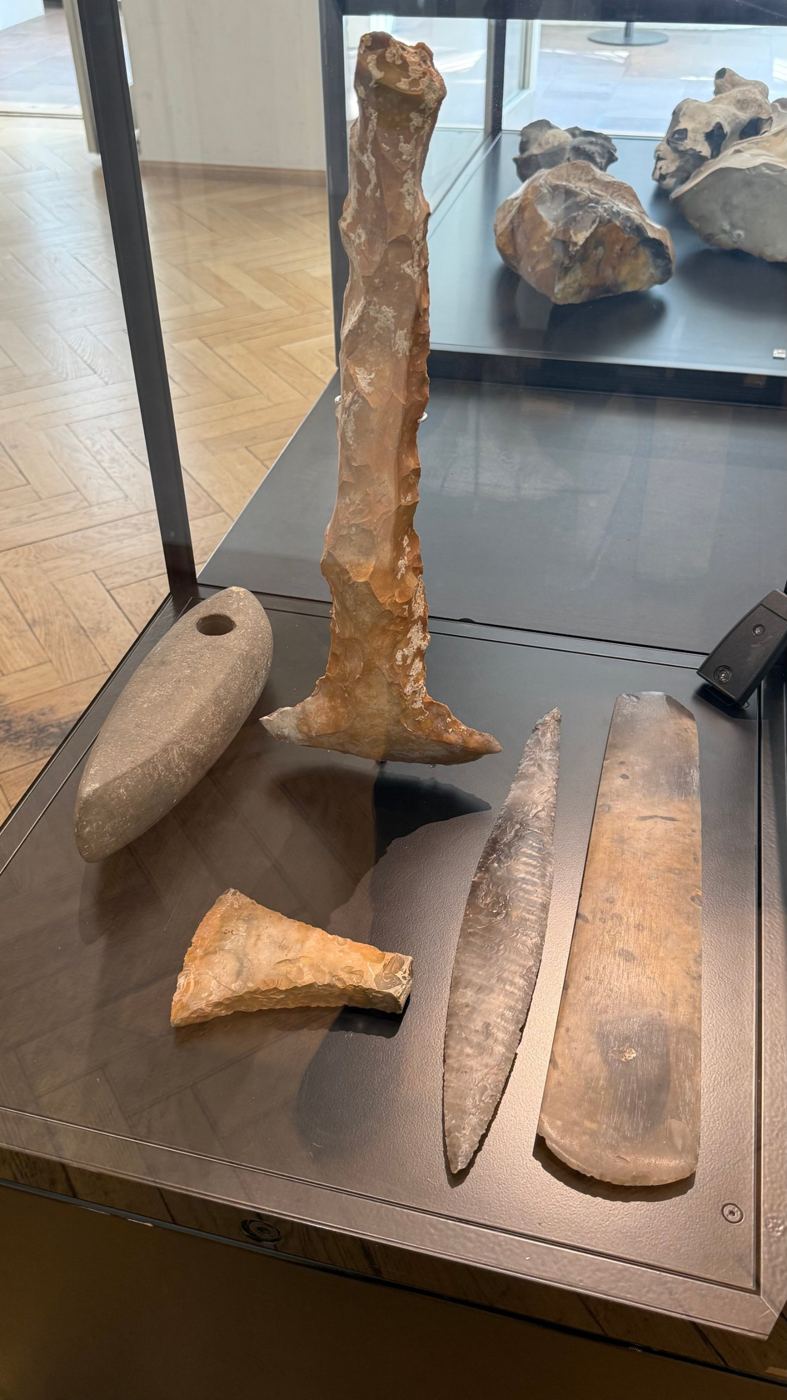
Archaeologists say these prehistoric weapons were meant to showcase masculinity or status, and that all the effort put into making them, with such difficulty and refinement, was just «for show». The wear on them is supposedly from carrying them like a belt or as part of clothing, not from their use as weapons.
I find this hard to accept. When you see the skill it takes, you understand that nobody works this hard for decoration alone.
What the Danes Themselves Believed
What is fascinating is that the Danish people kept another memory of these objects. For centuries, across most of Denmark, in Zealand, Funen and Jutland, Stone Age flint axes and sometimes dagger blades were called thunderstones. People believed they fell from the sky with lightning. In Danish folklore, the lightning strike is the stone coming down from heaven.
Families kept them at home for protection. In Giver, near Aalborg, a flint axe was kept behind the wall panelling so that lightning would not strike the house. On Funen, a woman remembered that her parents kept one on the floor under a chest. These testimonies were collected by the Danish archaeologist Christian Blinkenberg in his book The Thunderweapon in Religion and Folklore (1911).
In some parts of Jutland, the thunderstone was a fossil sea urchin. Without knowing it, I had photographed one at the museum, sitting inside a piece of flint.
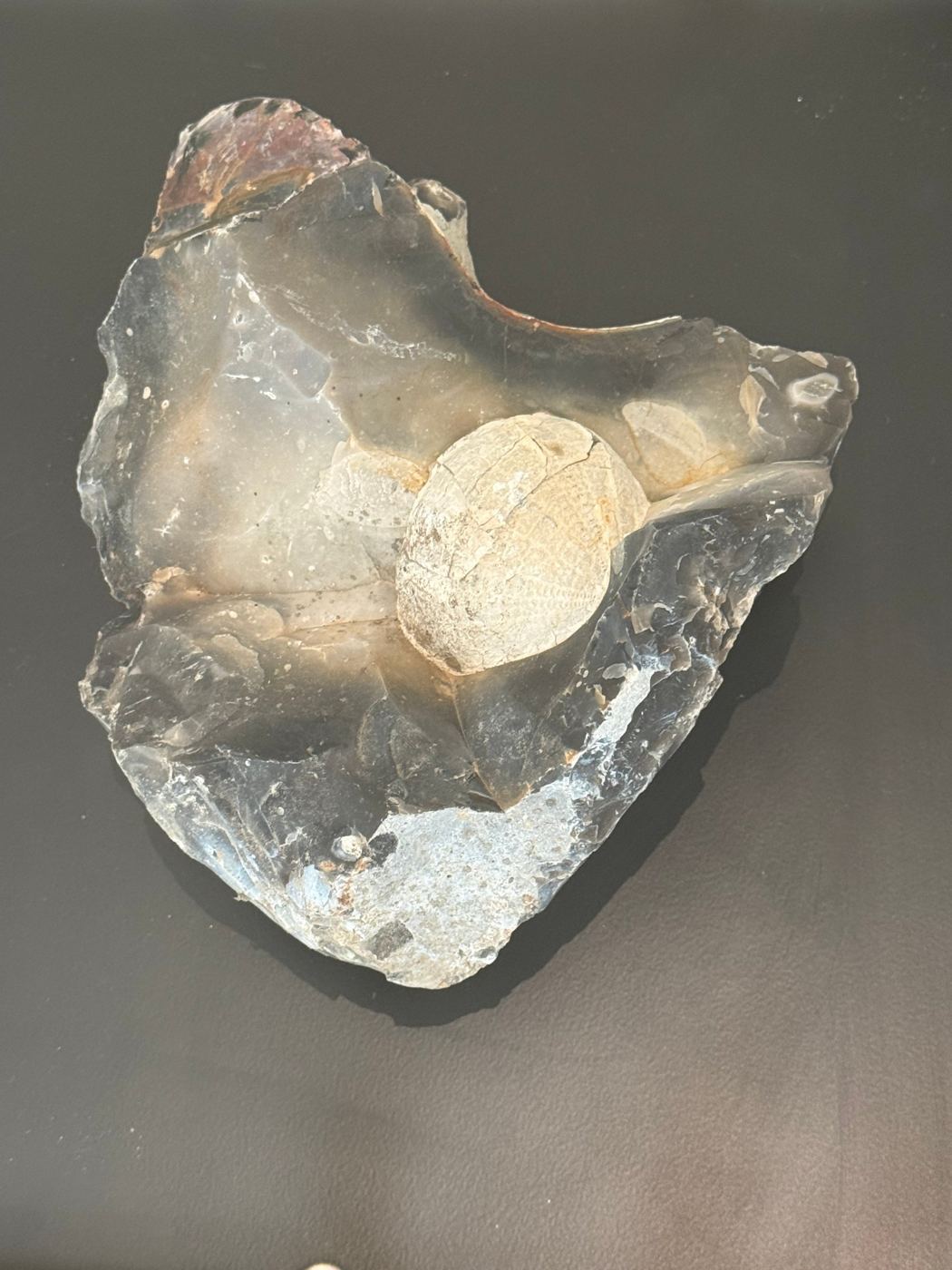
Even the Vikings placed Stone Age axes in their graves, thousands of years after these axes were made.
The Museum Shop
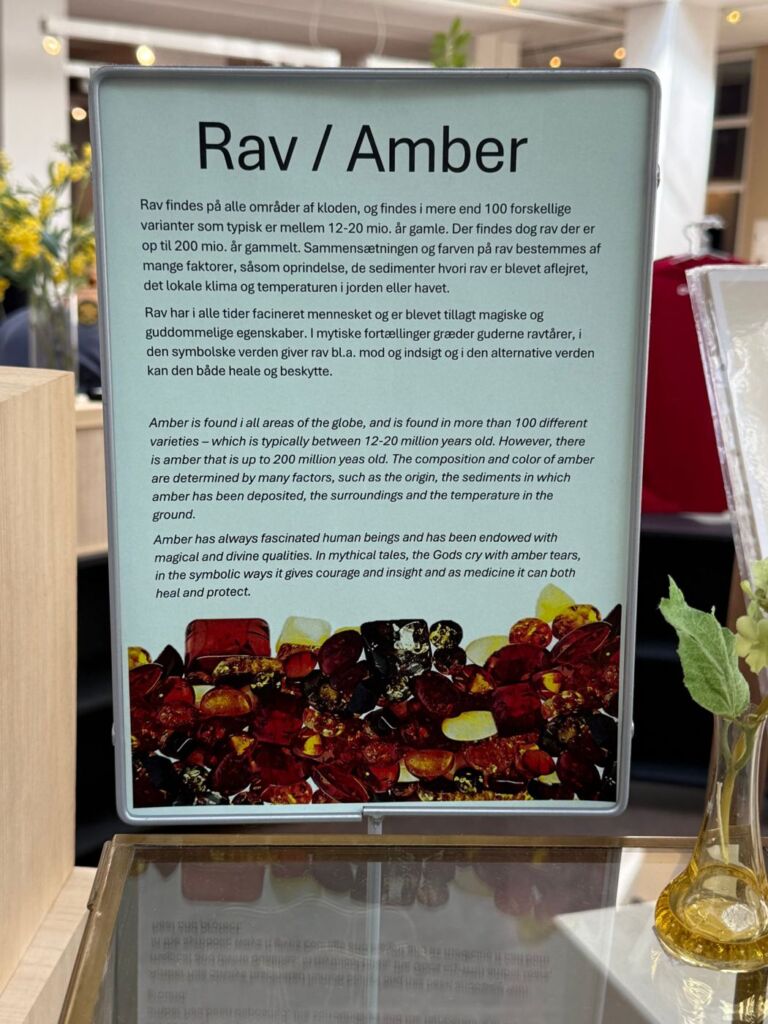
In the museum shop, next to the amber jewellery, there is a small sign. It says that amber “has been endowed with magical and divine qualities,” that in mythical tales “the Gods cry with amber tears,” and that it “can both heal and protect.”
I smiled when I read it. In the shop, a stone may protect you. In the galleries, flint is only for status or for chopping.
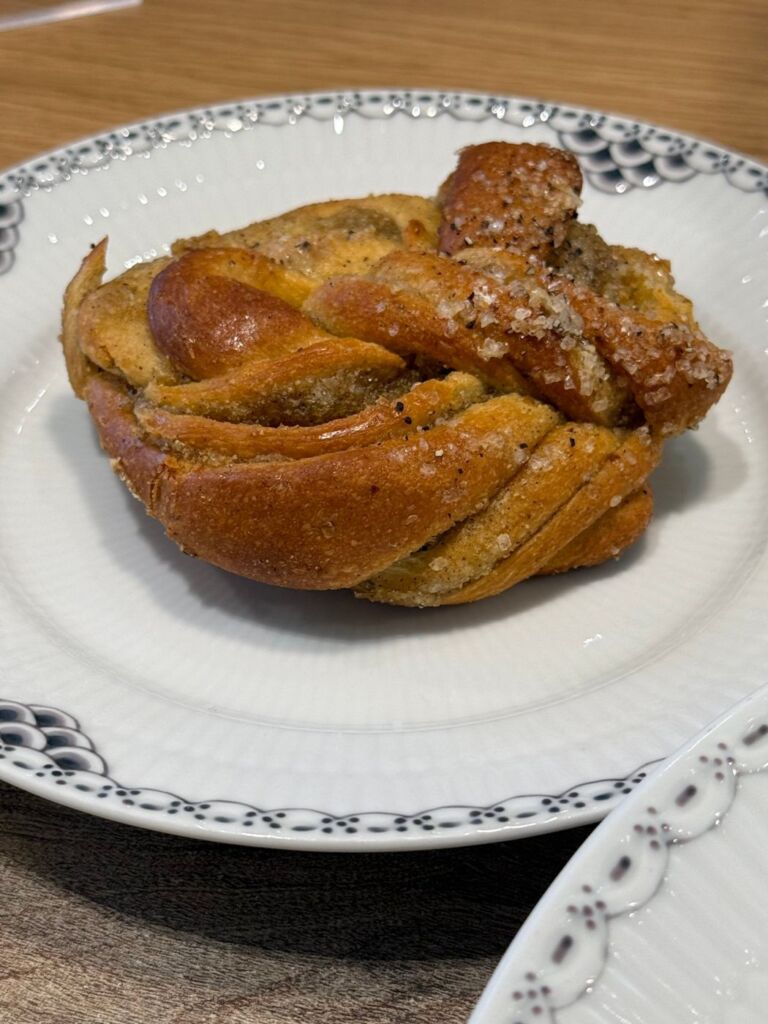
I had a cardamom bun on a lovely Royal Copenhagen plate before walking on.
A Walk Along the Canal
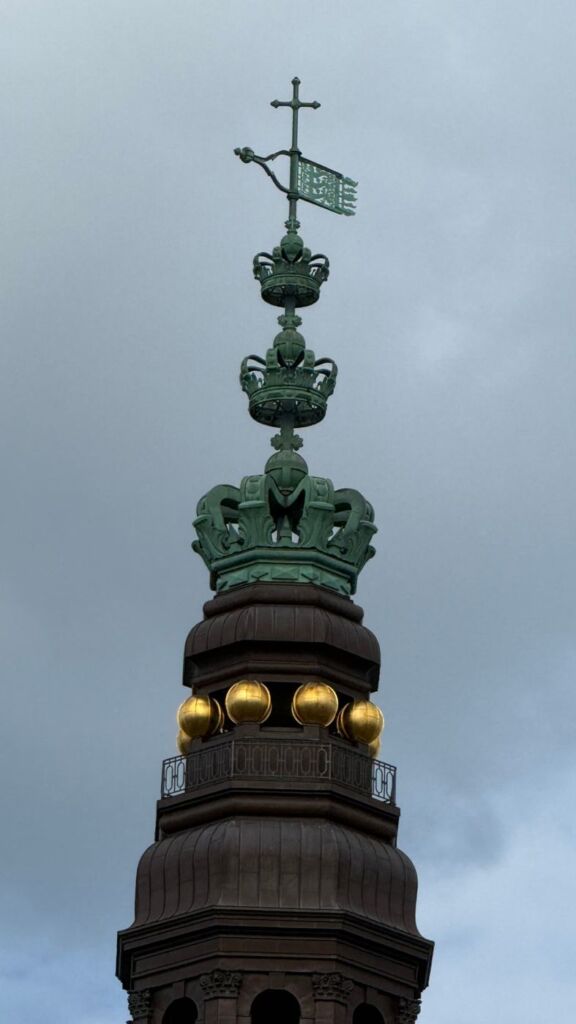
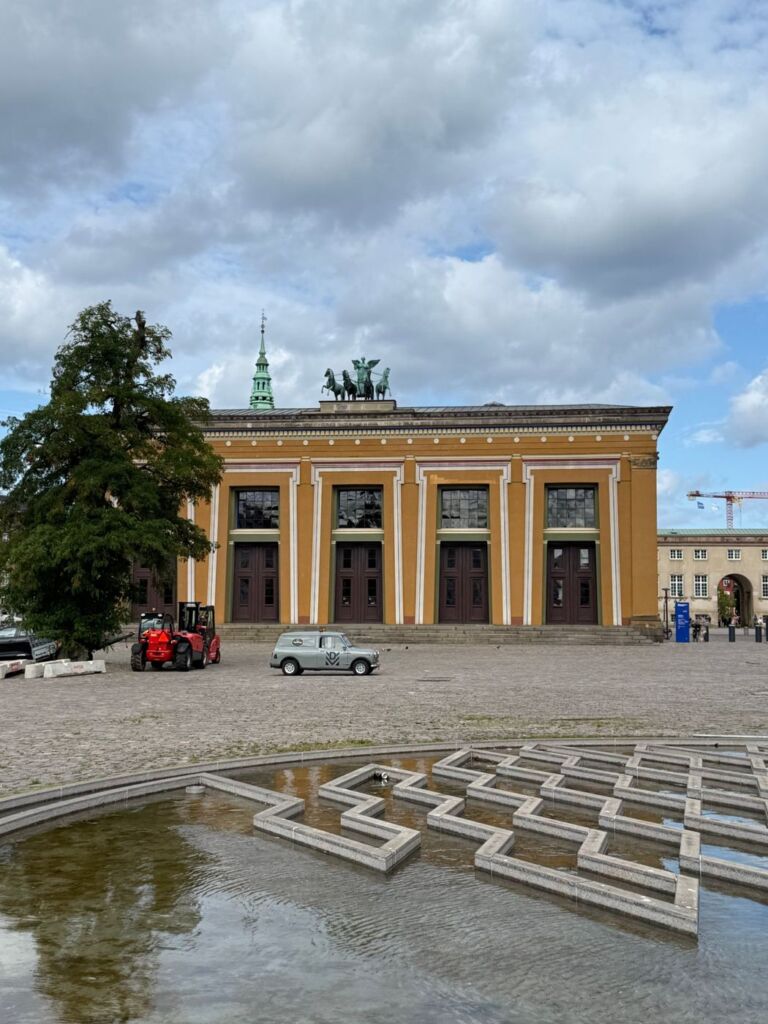
I walked past Christiansborg, with its green crowns and golden spheres, and past Thorvaldsens Museum, painted in that warm ochre so typical of Copenhagen.
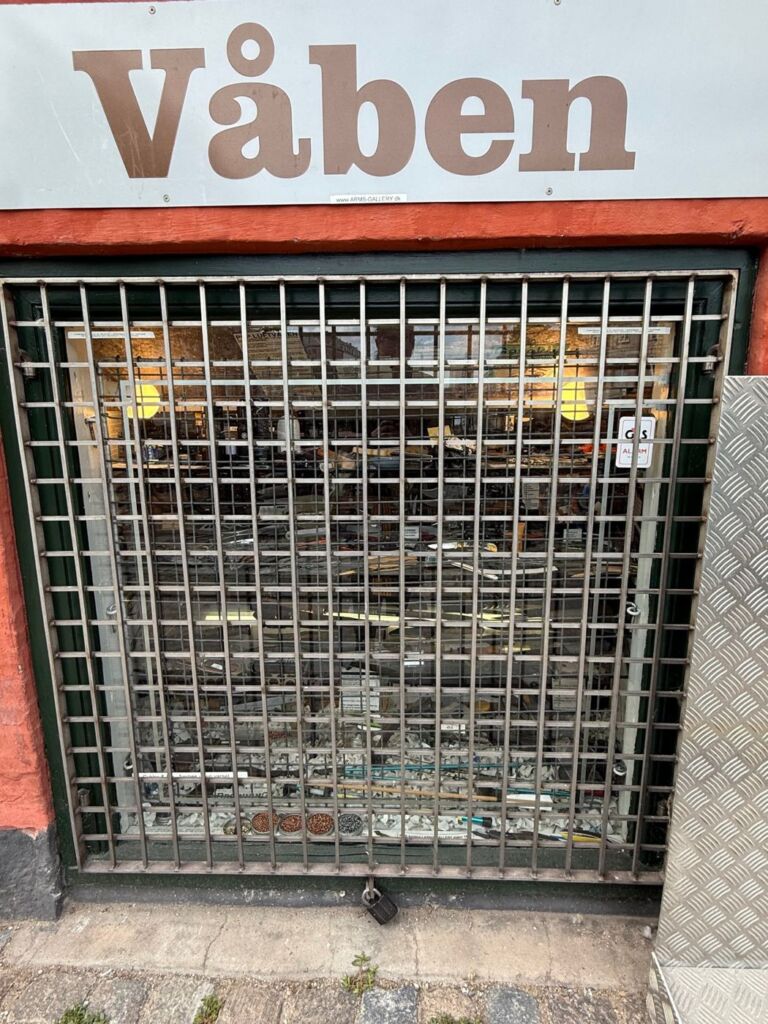
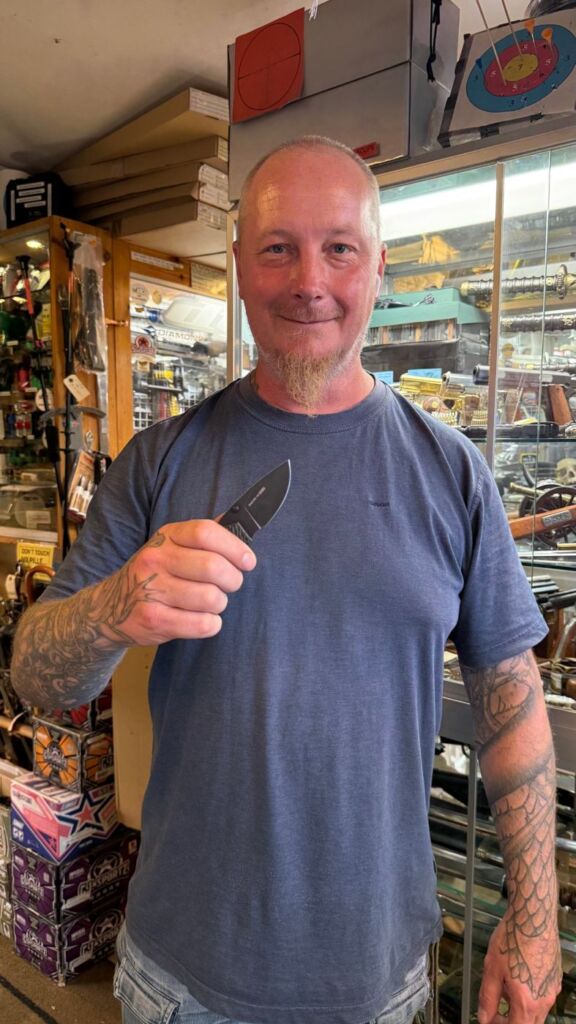
Across the canal I noticed a shop with one word above its window: Våben, which means “weapons” in Danish. Behind the steel bars there were knives of every kind. I went in, and the owner kindly agreed to pose for a photo. I bought a knife there as a gift for a friend, the same friend who owns the flint dagger you’ll see below.
Then it was time to go back to the station and catch my flight to Berlin.
The Dagger at the Window
Back home, I watched a video of the American flintknapper D.C. Waldorf making a Type IV Danish dagger, the fishtail type, from the same family as the Hindsgavl dagger. It takes hours of patient work, flake by flake, to shape the ridge along the handle, and one wrong strike can break the whole piece.
My friend owns a copy made by Waldorf. On the table it looks grey and matte, just a stone. But when you hold it up to the window, it turns honey-brown and the light passes through it.
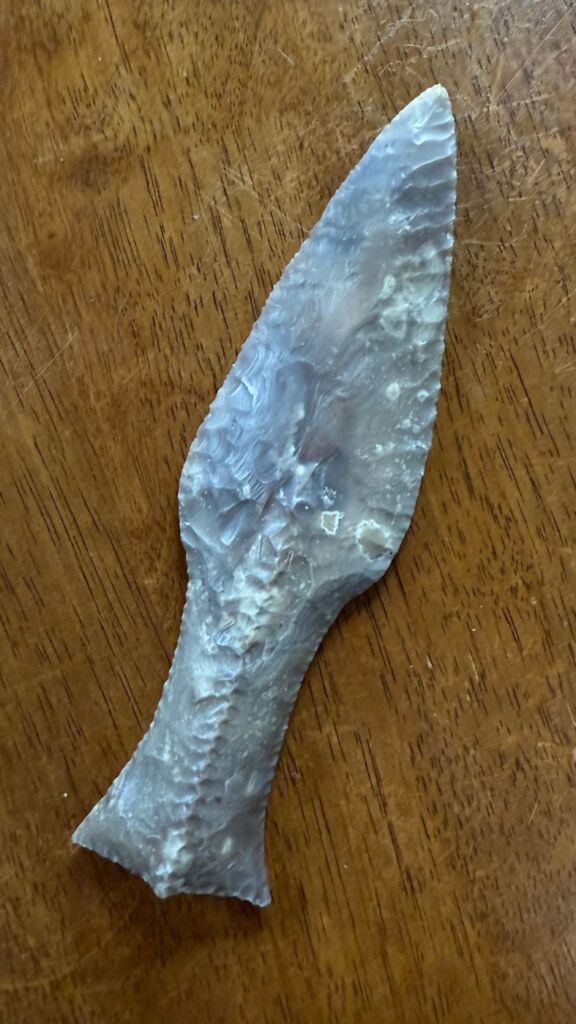
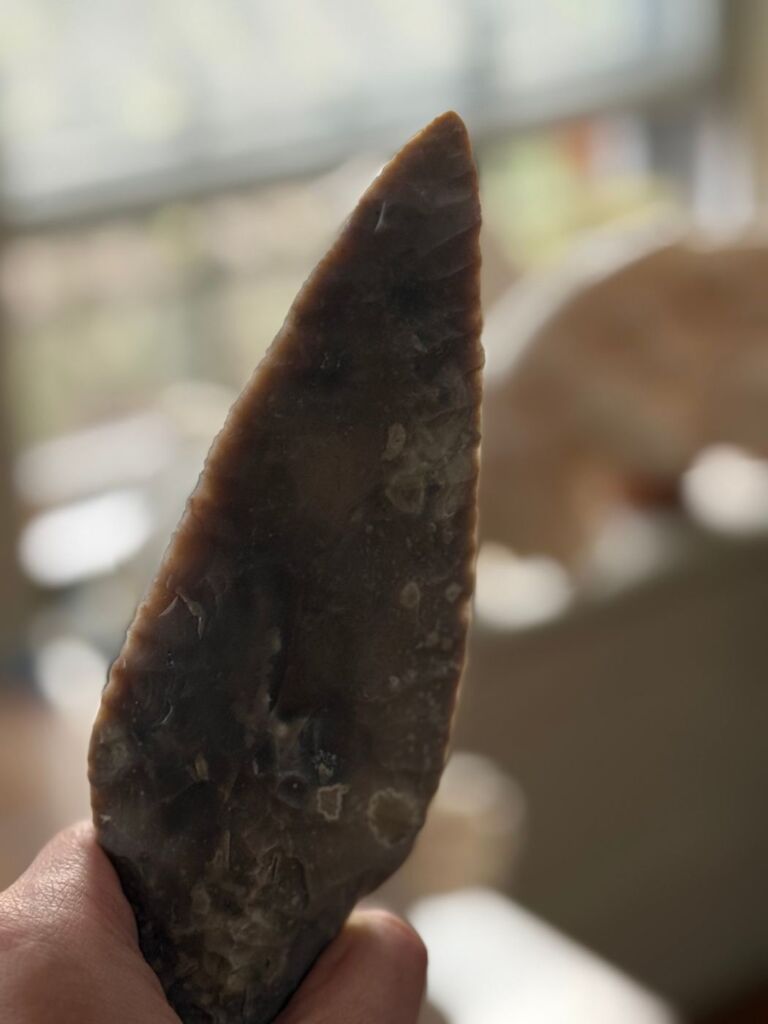
This ancient flint weapon, the Danish dagger, was remembered from a distant time in human origins as a weapon that had fallen from heaven, meant to be hurled against evil with powerful force.
Why imagine that a people would be so shallow? Wouldn’t you put such a weapon in your grave, to have a powerful, righteous weapon against supernatural forces close at hand? I would, a thousand times over.
Sources: National Museum of Denmark, Hindsgavl dagger (A33093); Christian Blinkenberg, The Thunderweapon in Religion and Folklore (Cambridge, 1911).
