
A Personal Connection to the Mongol Empire
Image: Portrait of Ögedei Khan located in the National Palace Museum in Taipei. Ögedei Khan. Portrait cropped out of a page from an album depicting several Yuan emperors (Yuandai di banshenxiang), now located in the National Palace Museum in Taipei. Original size is 47 cm wide and 59.4 cm high. Paint and ink on silk.
My fascination with the Mongol Empire runs deep. It is also personal, because it connects to Astrakhan, a place shaped by the history of the Golden Horde. Perhaps that is part of why this history feels so close to me. It carries echoes of a nomadic spirit that still resonates with my own journey, from the steppes of Southern Russia to New York City.
What interests me most is the Mongol Empire’s often overlooked role in supporting the arts. The empire is not usually remembered for its own literature or fine art. Yet it played a powerful part in encouraging artistic life across many cultures under its rule.
The Mongol khans became important patrons of craftsmanship and visual culture. Their support helped create a period of artistic flourishing across a vast empire. While the Mongols were not known as traditional artists themselves, they valued skilled work and understood the prestige that art could bring.
As the empire became more stable, khans and sub-khans protected and promoted artisans. Textile workers, architects, stone carvers, and jewelers were moved across regions such as the Middle East and Central Asia. These artists created remarkable works and left a lasting mark on Mongol courts.
Court Patronage and Capital Cities
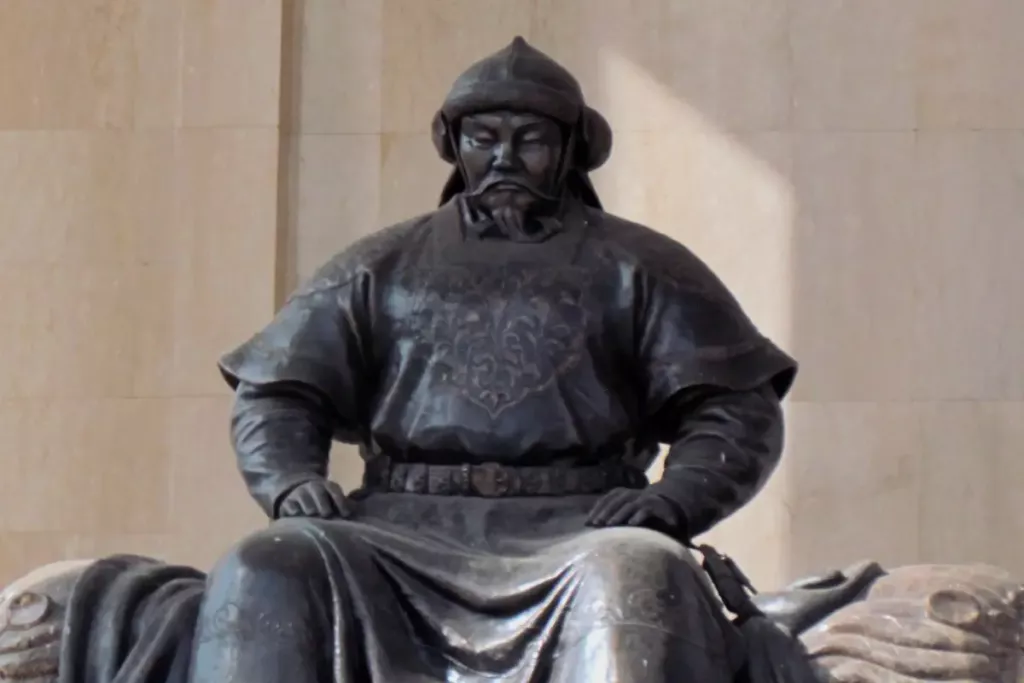
One striking example is Ögedei Khan, Genghis Khan’s successor. He focused on building and embellishing Karakhorum, the Mongol capital. Under his rule, artisans worked on architecture and decoration that reflected the power and ambition of the empire.
The city became a place where craft and politics met. As a result, artistic production gained importance not only as ornament, but also as a sign of authority. Mongol rulers used art to shape the image of their courts and to project stability.
Kublai Khan, Genghis Khan’s grandson and Great Khan during the Yuan dynasty in China, carried this support even further. His patronage helped Chinese porcelain flourish, especially the elegant blue-and-white style that later became so influential. He also supported the development of elaborate theatrical works and broader cultural production.
The arts under Kublai did not develop in isolation. They grew through contact, exchange, and movement across the empire. That made the Yuan period one of the most important moments in the artistic history of Mongol rule.
Exchange Across the Empire
During the Pax Mongolica, a period of relative peace, artists and artisans traveled across the empire more easily. This movement encouraged the exchange of ideas, techniques, and materials. It also helped create a rich mix of artistic traditions.
For example, Afghan lapis lazuli gave Chinese porcelain its brilliant blue tones. Persian influence appeared in artifacts from the Golden Horde. Even the Chinese dragon motif traveled into European painting, showing how wide the Mongol cultural reach had become.
This was not a one-way process. Different regions influenced one another, and the Mongol Empire created conditions that made this exchange possible. As a result, the empire became a bridge between artistic traditions that might otherwise have remained separate.
The Mongols may not have produced conventional art in the usual sense. Even so, their role as cultural patrons was essential. They nurtured creativity, protected artisans, and helped build a world in which artistic exchange could thrive.
A Living Artistic Heritage
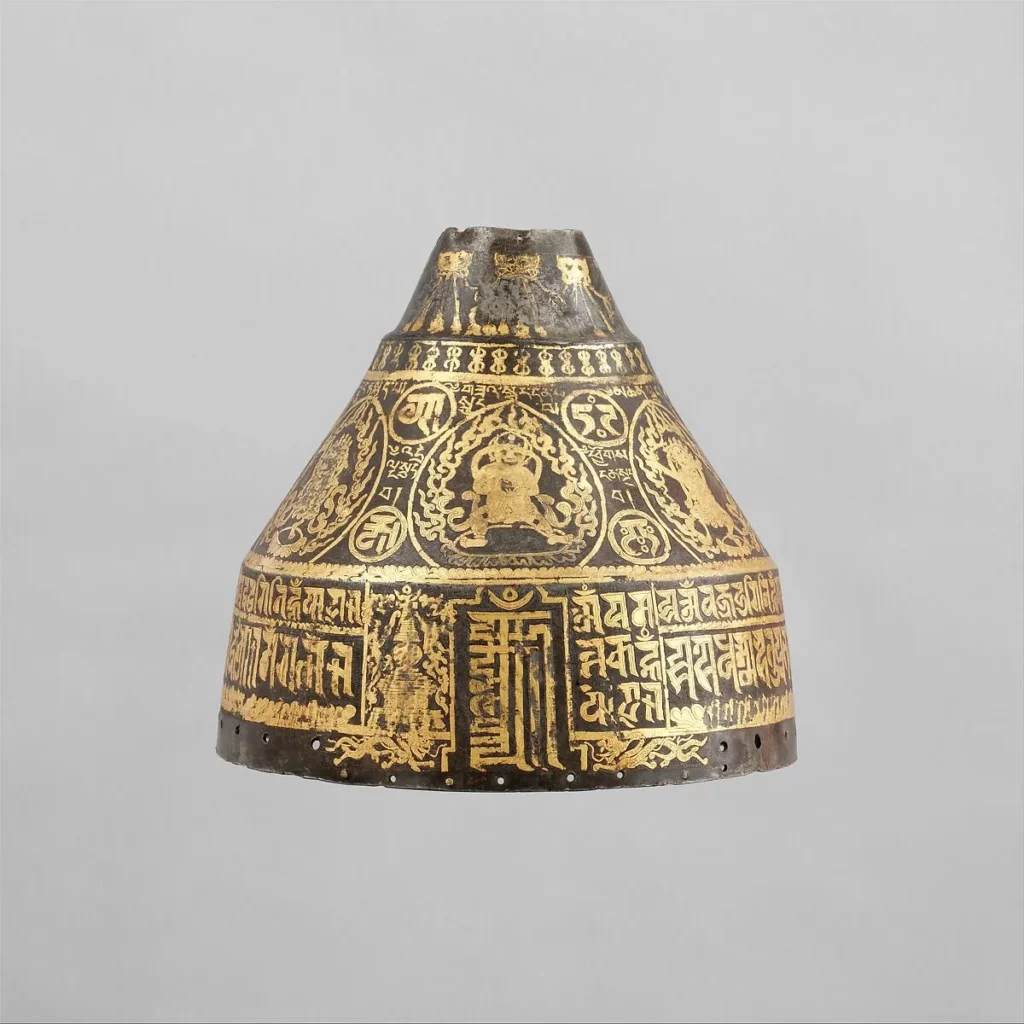
One powerful example of this legacy is a Mongolian helmet dating from the 15th to 17th century. It is now displayed at The Met Fifth Avenue in Gallery 378. The helmet is decorated with intricate gold damascening and reflects a striking fusion of artistic traditions.
Its surface includes six large ovals with depictions of Yamantaka, the deity known as the slayer of death. Around him are five female attendants, or dakinis, often described as sky-goers. Between them are twelve protective seed syllables, or bija, each with Tibetan inscriptions identifying their protective qualities.
The brow of the helmet also carries a series of mantras, including invocations to Yamantaka and the dakinis. At the center is a monogram known as the All-Powerful Ten, made from the ten Sanskrit syllables of the Kalachakra, or wheel of time, mantra. Nearby appears a stylized stupa, or chorten, a funerary monument and symbol of the enlightened mind.
This helmet is more than a military object. It is a work of art that reveals the layered cultural world shaped by Mongol patronage. It also shows how Buddhist, Tibetan, and Central Asian traditions could come together in a single object.
Astrakhan and Sarai Batu
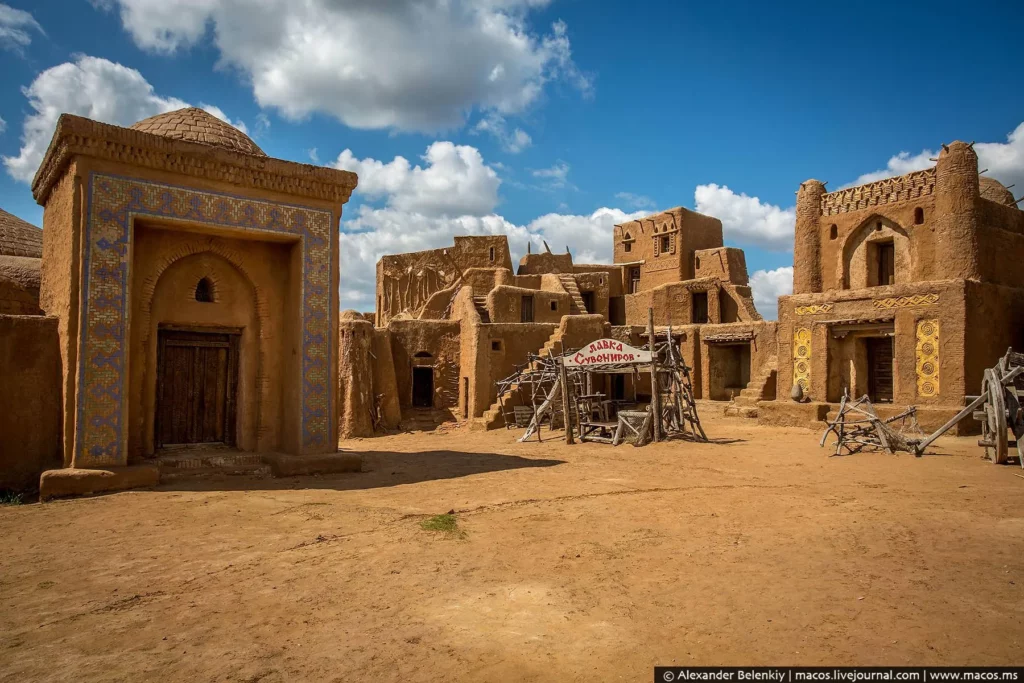
As someone from Astrakhan, I feel this history in a personal way. Astrakhan was once the capital of a Tatar khanate and is closely linked to the legacy of the Golden Horde. It also lies near Sarai Batu, another important city from the Mongol era.
These places make the Mongol past feel immediate rather than distant. Their history reminds us that the empire’s artistic and cultural influence did not vanish. It continued to shape the region long after the empire itself changed.
In Astrakhan and Sarai Batu, the artistic heritage of the Mongol Empire is still alive. Museums, cinema, and cultural institutions help preserve that memory. Artistic revivals also draw inspiration from the past and bring those influences into contemporary work.
Cultural festivals and local events keep this heritage visible. Architecture from the Mongol-influenced world provides another link to the past. Together, these forms of preservation show that the Mongol legacy remains part of the present.
Legacy of the Mongol Empire
The Metropolitan Museum of Art preserves many objects from the Mongol era, including sculptures, textiles, weaponry, jewelry, and manuscripts. These works offer insight into the empire’s artistic world and its wide cultural reach. They also show how Mongol rule shaped visual culture across many regions.
The artistic legacy of the Mongol Empire is not simply about conquest or empire building. It is also about patronage, mobility, and exchange. The Mongol rulers helped create conditions in which artistic traditions could meet and develop together.
That legacy still matters today. It reminds us that creativity often grows through contact between cultures. In that sense, the Mongol Empire remains a powerful example of how art can flourish across realms.
- Points of Interest & Landmarks: Sarai Batu
- List of Mongolian Intangible Cultural Heritage
- Past Exhibit at the MET "The World of Khubilai Khan: Chinese Art in the Yuan Dynasty",
- Catalogue you can download here.
